




Financial wellness is about more than dollars and cents. It's about feeling confident in your financial decisions, managing life's challenges, preparing for the future, and having support when you need it most. Whether you're building savings, managing debt, improving your credit, or navigating a major life event, TRUE is here to help.
{beginNavtabs}
Budgeting and Money Management
Take Control of Your Everyday Finances
A budget isn't about restricting yourself. It's about giving your money a purpose.
Good money management can help you:
- Reduce financial stress
- Avoid unnecessary debt
- Reach savings goals faster
- Gain confidence in your financial future
Resources
- Financial Wellness Assessment
- Budgeting
- Create a Budget
- Budget Calculator
- Savings Calculator
- Why You Should Track Your Spending
- The 75/15/10 Budgeting Rule: Is it Right for You?
Budgeting Tip
Start small. Even tracking your spending for a single month can reveal opportunities to save.
Emergency Savings
Prepare for the Unexpected
Life happens. Car repairs, home repairs, medical expenses, and unexpected emergencies can appear without warning.
Building an emergency fund can help you:
- Reduce financial stress
- Stay on track with your goals
- Recover more quickly from setbacks
Tips for building an emergency fund:
- Start with a realistic savings goal
- Set up automatic transfers to your checking account
- Save a portion of tax refunds, bonuses, and other extra income
- Keep your emergency fund separate from everyday spending money
Resources
- Emergency Fund Calculator
- How Much Emergency Savings Do I Need?
- Savings Calculator
- Build Your Emergency Fund
- Emergency Funds: Plan to Save
- How an Emergency Fund Helps You Become Financially Resilient
- Should You Pay Off Debt or Save For Emergencies First?
Savings Tip
Don't wait until you can save a large amount. Setting aside just $5 to $10 a week can help build the habit of saving, and over time, those small deposits can add up to a meaningful financial safety net.
Life Events and Milestones
Financial Guidance for Life's Major Moments
Major life changes often come with important financial decisions. Whether you're starting a new job, getting married, growing your family, buying a home, planning for education, or preparing for retirement, having a financial plan can help you navigate each milestone with confidence.
Taking time to understand the financial impact of life's big moments can help you stay on track, avoid surprises, and make informed decisions that support your long-term goals.
Questions to Consider
- How will this life change affect my budget?
- Do I need to update my savings goals?
- Should I review my insurance coverage?
- Do I have an emergency fund in place?
- What financial resources are available to help?
Buying Your First Home
Resources
- To Buy or Not To Buy
- Buying a Home: Exploring Your Options
- Mortgage Types
- The Cost of a Mortgage: A Comprehensive Guide
- Making a Down Payment on a House
- Moving Costs
Growing Your Family
Resources
- Preparing for a Baby: The Cost of a Baby's First Year
- The Cost of a Baby's First Year
- College Savings Plans
- The Cost of College Life
Retirement Planning
Resources
Navigating Life Changes
Resources
- Financial To-Dos for Newlyweds
- Property and Divorce
- The Cost of Divorce: A Financial Guide
- To-Dos for Leaving a Job
- Life Insurance
- Estate Planning Checklist
- Financial Steps After the Death of a Loved One
Life Planning Tip
Big milestones can feel overwhelming, but you don't have to prepare for everything at once. Break large financial goals into smaller, manageable steps, and celebrate your progress along the way.
Debt Management and Debt Consolidation
Creating a Plan for Progress
Managing debt can feel overwhelming, but taking steps to understand your options can help you regain control of your finances. Whether you're working to pay down credit card balances, reduce monthly payments, or simplify multiple debts, creating a plan can help you make steady progress toward your financial goals.
Debt consolidation may be one option to consider if you have multiple debts with varying interest rates and payment schedules. By combining debts into a single payment, you may find it easier to manage your finances and stay on track.
Signs You May Need Help
- Making only minimum payments
- Using credit to cover daily expenses
- Difficulty keeping up with bills
- Carrying balances month after month
Steps Toward Managing Debt
- Review all of your debts, balances, and interest rates.
- Create a budget to identify areas where you can free up extra money for payments.
- Focus on paying more than the minimum whenever possible.
- Avoid taking on additional debt while working toward your goals.
- Explore whether debt consolidation could simplify repayment.
Resources
- Debt to Income Ratio
- How to Manage Your Debt: Strategies and Tools
- Managing Debt Without Stress
- How to Rebuild Your Credit Score After Late Payments
- Deconstructing the Debt Snowball
- How to Know Which Debt Consolidation Option is Best For You
Debt Management Tip
If you have multiple debts, consider organizing them from highest interest rate to lowest. Paying extra toward high-interest debt while making minimum payments on the rest can help you save money over time and become debt-free sooner.
Credit Score and Credit Building
Understand Your Credit and Take Steps to Strengthen It
Your credit score can play an important role in your financial life. It may affect your ability to qualify for loans, secure favorable interest rates, rent a home, or even obtain certain services. Understanding how credit works can help you build a strong financial foundation and make confident borrowing decisions.
Whether you're just starting to establish credit or looking to improve your score, small, consistent habits can make a big difference over time.
Ways to Build and Maintain Good Credit
- Pay bills on time, every time.
- Keep credit card balances low compared to available limits.
- Review your credit report regularly for accuracy.
- Avoid applying for multiple new credit accounts in a short period.
- Build a history of responsible credit use over time.
Resources
- Using Credit
- How to Improve Credit Score
- Ways to Build Credit With No Credit History
- Credit Score Myths Debunked
- Checking in on Your Credit Report
Credit Building Tip
Financial Stress and Mental Wellness
Find Balance and Build Confidence in Your Financial Journey
Money can affect more than just your bank account. Financial challenges and uncertainty can lead to stress, anxiety, and feelings of overwhelm. Taking small steps to improve your financial well-being and seeking support when needed can help you feel more confident and in control.
Remember, you're not alone. Many people experience financial stress at some point in their lives, and there are resources available to help you develop healthy financial habits and reduce the emotional impact of money-related concerns.
Healthy Ways to Reduce Financial Stress
- Create a realistic budget
- Focus on one financial goal at a time
- Build an emergency fund
- Seek trusted financial guidance
- Celebrate small wins along the way
Resources
- Strategies for Managing Financial Stress and Anxiety
- Coping With Financial Stress
- Money and Emotions
- Managing Debt Without Stress
Wellness Tip
Gambling
When Gambling Impacts Your Financial Well-Being
Gambling can start as entertainment, but for some individuals it can become a source of financial stress, debt, and personal hardship.
If gambling has affected your finances, know that you're not alone and support is available.
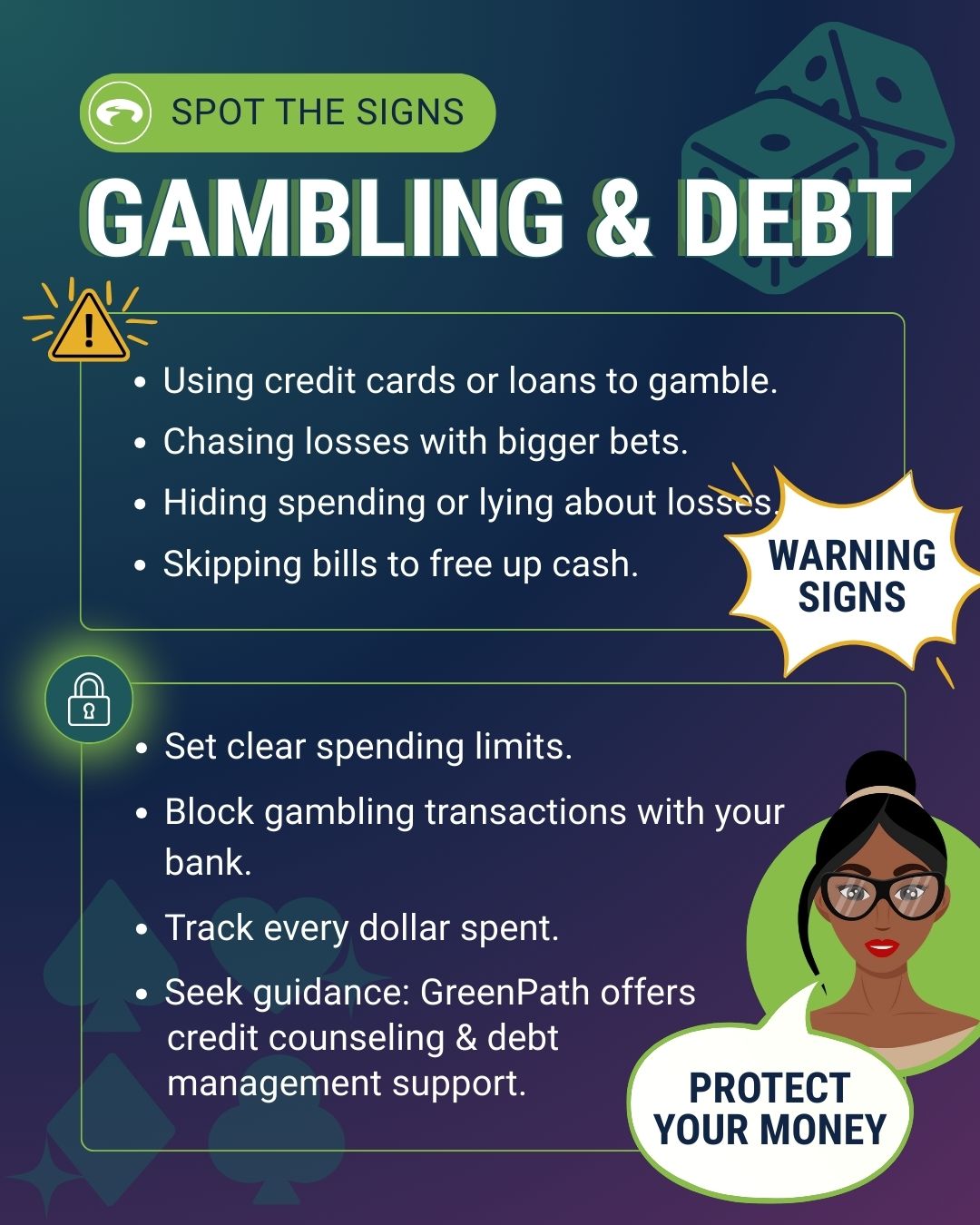
Warning Signs
- Using credit cards or loans to gamble
- Missing bill payments due to gambling losses
- Borrowing money to continue gambling
- Hiding gambling activity from loved ones
- Feeling anxious, overwhelmed, or stressed about finances
- Chasing losses in hopes of recovering money
Strategies for Staying in Control
- Set and stick to a spending limit before gambling.
- Never gamble with money needed for bills or essentials.
- View gambling as entertainment, not a source of income.
- Take regular breaks and monitor the time you spend gambling.
- Seek support if gambling is causing financial or personal difficulties.
Steps You Can Take
- Take an honest look at your financial situation.
- Prioritize essential expenses including housing, food, transportation, and utilities.
- Develop a plan to manage existing debt.
- Reduce access to gambling platforms and accounts.
- Seek support from trusted professionals and organizations.
- Focus on rebuilding healthy financial habits.
Resources
- Gambling: The Hidden Costs
- The Dangers of Sports Betting
- Budgeting Basics
- How to Manage Your Debt: Strategies and Tools
Encouraging Message
Recovery is possible. Every step you take toward financial stability is a step worth celebrating.
{endNavtabs}
Whatever life brings, we're here to help you take the next step toward financial confidence and peace of mind.